
Study agriculture in Canada

Grow your future.
On this page:
- Why study agriculture in Canada?
- What is agriculture?
- Studying agriculture at college or university
- Career fields in agriculture
- Next steps
Why study agriculture in Canada?
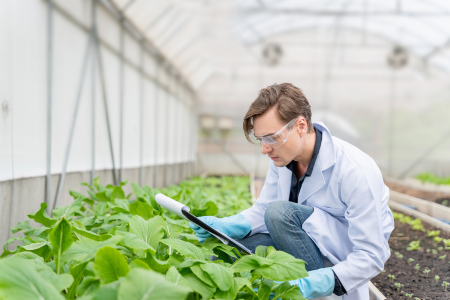
Agriculture in Canada goes far beyond traditional farming. This field of study includes food science, sustainability, technology, global food systems, and more.
Canada is a global leader in agriculture, agri-food innovation, and sustainable food systems. Studying agriculture in Canada will give you the chance to:
- learn through hands-on experiences working in labs, fields, greenhouses, and farms
- access modern agricultural technology, research facilities, and food science labs
- gain practical experience through partnerships with colleges, universities, and industry
- develop skills that are in demand across Canada’s agri-food and environmental sectors
Canada’s strong focus on sustainability, food security, and innovation makes it an ideal place to study agriculture and prepare for a global career.
What is agriculture?
Agriculture is the science and practice of producing food, managing natural resources, and supporting sustainable food systems. It combines biology, environmental science, technology, and business to improve how crops are grown, animals are raised, and food is processed and distributed.
Modern agriculture also includes agri-technology, where tools such as data analytics, automation, and precision equipment are used to increase efficiency and reduce environmental impact. Graduates of agriculture programs play an important role in feeding communities, protecting ecosystems, and responding to global challenges such as climate change and food security.
Studying agriculture at college or university
Agriculture programs in Canada are offered at both colleges and universities, with different learning approaches and outcomes. Choosing the right pathway depends on your interests, learning style, and career goals.
Studying agriculture at college
College agriculture programs focus on practical, hands-on training and applied skills. These programs are designed to prepare you to work in agricultural operations, agri-food businesses, and technical roles. This pathway may suit you if you want to enter the workforce quickly or prefer learning through practical experience.
Students in college programs often:
- spend significant time in labs, fields, greenhouses, and applied learning environments
- work with modern equipment, technology, and industry-standard practices
- gain job-ready skills through co-op placements, internships, or work-integrated learning
College programs commonly lead to a certificate, diploma, or applied degree in some institutions.
Studying agriculture at university
University agriculture programs place a stronger emphasis on theory, research, and scientific analysis, while still including applied learning components. These programs explore agriculture from a broader systems perspective, including science, policy, sustainability, and innovation. This pathway may suit you if you are interested in research, leadership roles, advanced study, or careers that require strong scientific or analytical foundations.
Students in university programs often:
- study biological and environmental sciences in greater depth
- participate in research projects and advanced laboratory work
- develop analytical, problem-solving, and research skills
University programs can lead to a bachelor’s degree, followed by master’s or doctoral degrees.
In 2025, Canada's agriculture and food sector generated $150 billion of Canada's GDP, over $100 billion in exports, and supported one in nine jobs. (Agriculture and Agri-Food Canada, 2026)
Career fields in agriculture
Professionals in agriculture apply scientific knowledge and practical skills to solve real-world challenges across a wide range of industries. As agriculture continues to evolve through innovation, sustainability practices, and technology, new career opportunities are emerging across Canada.
Some popular career pathways related to agriculture include:
Food scientist or technologist
Work on electrical systems in buildings, manufacturing, and power distribution. Help implement energy systems, control panels, and wiring plans that keep systems running smoothly.
Help improve yields, manage pests and diseases, and promote sustainable farming practices through research, fieldwork, and data analysis.
Apply technology to improve agricultural operations. This may include working with precision agriculture tools, automated equipment, sensors, and data systems
Environmental or sustainability specialist
Focus on protecting land, water, and soil resources while supporting agricultural production.
Learn more about agriculture-related careers in Canada using the Job Bank’s labour market trend analysis tool.
Next steps
- Start your journey
- Find programs and costs
- Search colleges and universities
- How to apply to school in Canada
Features:

Study artificial intelligence in Canada
Influence the next generation of AI. Learn about the field of AI, and why you should choose to study in Canada.

Study engineering technology in Canada
Build the future with hands-on skills. Learn about the field of engineering technology, and why you should choose to study in Canada.

Study health and life sciences in Canada
Improve lives through science and care. Learn about health and life sciences, and why you should choose to study in Canada.
- Date modified:
