
Study clean energy and sustainability in Canada

Power a more sustainable future.
On this page:
- Why study clean energy and sustainability in Canada?
- What is clean energy and sustainability?
- Career fields in clean energy and sustainability
- Next steps
Why study clean energy and sustainability in Canada?
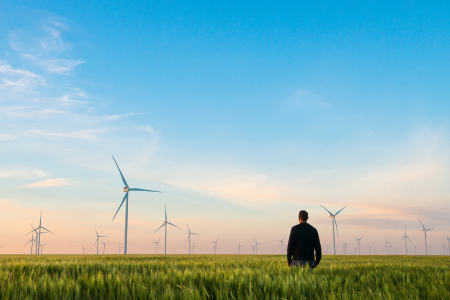
Clean energy and sustainability are fields of study focused on building a more environmentally responsible and resilient future. In Canada, these fields are growing due to national priorities related to climate action, resource management, and innovation.
Studying clean energy and sustainability in Canada will give you the opportunity to:
- explore solutions to climate change, energy conservation, and environmental protection
- gain experience working with real-world environmental data, energy systems, and sustainability projects
- develop knowledge and skills aligned with Canada’s clean energy, climate, and infrastructure priorities
- pursue studies connected to meaningful careers with long-term, global impact
Canada’s diverse geography, natural resources, and strong research and innovation ecosystem make it an ideal place to study clean energy and sustainability.
Canada is planning to reduce 40-45% of emissions to below 2005 levels by 2030 and net-zero emissions by 2050. (Environment and Climate Change Canada, 2025)
What is clean energy and sustainability?
Clean energy focuses on producing and using energy in ways that reduce environmental impact and greenhouse gas emissions. This includes renewable and low-emission energy sources such as wind, solar, hydroelectric power, bioenergy, and other emerging clean technologies sources.
Sustainability is a broader concept that involves balancing environmental protection, economic development, and social well-being. Programs in this field often examine how energy systems, natural resources, communities, and industries can operate responsibly over the long term.
Canada is investing in clean energy, climate solutions, and sustainable infrastructure across many regions of the country. (Government of Canada, 2026)
Studying clean energy and sustainability at college or university
Clean energy and sustainability programs are offered at both colleges and universities in Canada, with different learning approaches and outcomes. Choosing the right pathway depends on your interests, learning style, and career goals.
Studying clean energy and sustainability at college
Our colleges, institutes and polytechnics offer programs in clean energy and sustainability that focus on practical, applied training and technical skills. These schools design their programs to prepare you for work in energy systems, environmental technologies, and sustainability-focused operations.
This pathway may suit you if you want to enter the workforce quickly or prefer learning through hands-on experience with tools, equipment, and real-world systems.
Students in college programs often:
- work with renewable energy technologies such as solar, wind, and energy efficiency systems
- gain hands-on experience in labs, fieldwork environments, and technical training facilities
- participate in co-op placements, internships, or other work-integrated learning opportunities
- develop job-ready technical skills
College programs commonly lead to a certificate, diploma, or an applied degree.
Studying clean energy and sustainability at university
University programs in clean energy and sustainability place a stronger emphasis on theory, systems thinking, and scientific or technical analysis, while still including applied learning components.
These programs explore energy systems, environmental science, and sustainability from a broader perspective, including policy, innovation, and long-term environmental planning.
This pathway may suit you if you are interested in research, advanced study, or roles that require strong analytical and problem-solving skills.
Students in university programs often:
- study energy systems, environmental science, and sustainability topics in greater depth
- participate in research projects, modelling, and advanced laboratory work
- develop analytical, critical thinking, and systems-based problem-solving skills
- explore policy, innovation, and emerging technologies in the energy transition
University programs can lead to a bachelor’s degree, followed by graduate studies (master’s or doctoral degrees).
Career fields in clean energy and sustainability
If Canada (and the world) reaches its net-zero economy goal by 2050, jobs in the clean energy sector will grow by an estimated 2.2 million in the decades ahead (at 7% per year). (Clean Energy Canada, 2025)
Students who graduate with a specialization in clean energy and sustainability work across energy production, environmental management, research, policy, and infrastructure.
Some common career pathways include:
Renewable energy technologist or technician
Support the installation, operation, and maintenance of renewable energy systems such as solar, wind, or bioenergy.
Work with governments, organizations, or research groups to support climate-related initiatives. Roles may involve research, program evaluation, and stakeholder engagement.
Environmental or sustainability specialist
Apply environmental science and sustainability practices to support responsible resource management.
Energy systems or clean technology analyst
Analyze energy data, system performance, and environmental impacts to support decision-making.
Learn more about clean energy and sustainability-related careers in Canada using the Job Bank’s labour market trend analysis tool.
Next steps
- Start your journey
- Find programs and costs
- Search colleges and universities
- How to apply to school in Canada
Features:
Study agriculture in Canada
Grow your future. Learn about the field of agriculture, and why you should choose to study in Canada.

Study STEM in Canada
Innovate, discover, and solve global challenges. Learn about the field of STEM, and why you should choose to study in Canada.

Study data and information management in Canada
Shape the future through data-driven decisions. Learn about the field of data and IM, and why you should choose to study in Canada.
- Date modified:
